The 2030 FIFA World Cup in Spain, Portugal & Morocco is only about 45 moons away (depending on your own set of lunar circumstances) and it promises to be a real doozy. World Cup history is a tale resplendent with stories of triumph against the odds, childhood dreams coming true and unsung heroes becoming legends. As well as dumb idiot losers, wanker fuck-ups and teams that are just total bullshit.
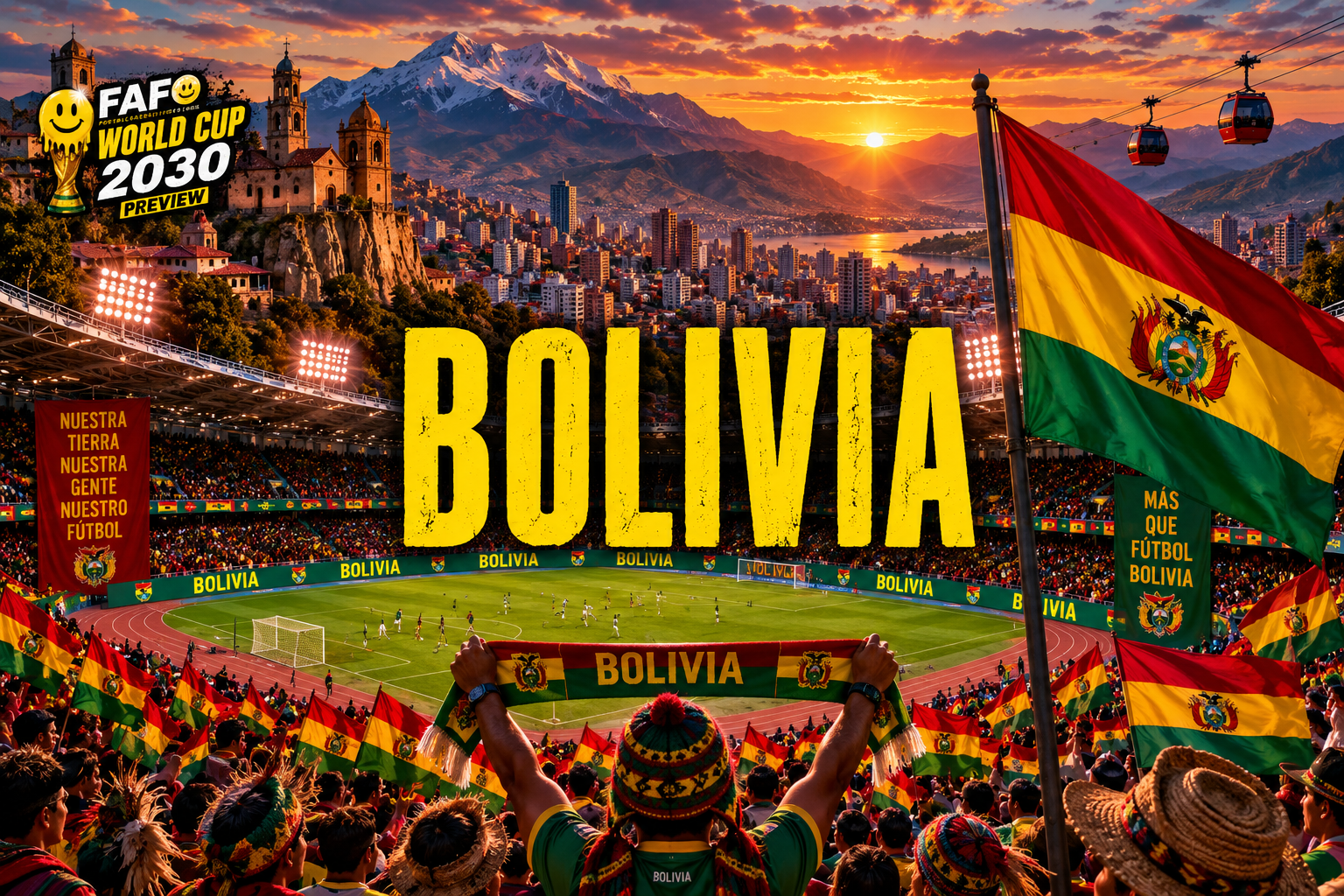
But how shall ye learn about these legends, losers and teams that are just total bullshit? Well look no further my wayward friend as I, together with the Almighty Wheel (There is only One Wheel, The Roundest One, and FAFO is its Prophet), profile all 211 FIFA member associations eligible for World Cup qualification. Today, I take a look at Bolivia, which has qualified for the World Cup three times.

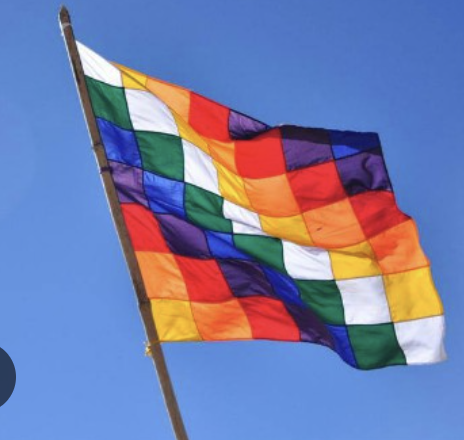

🇧🇴 BOLIVIA
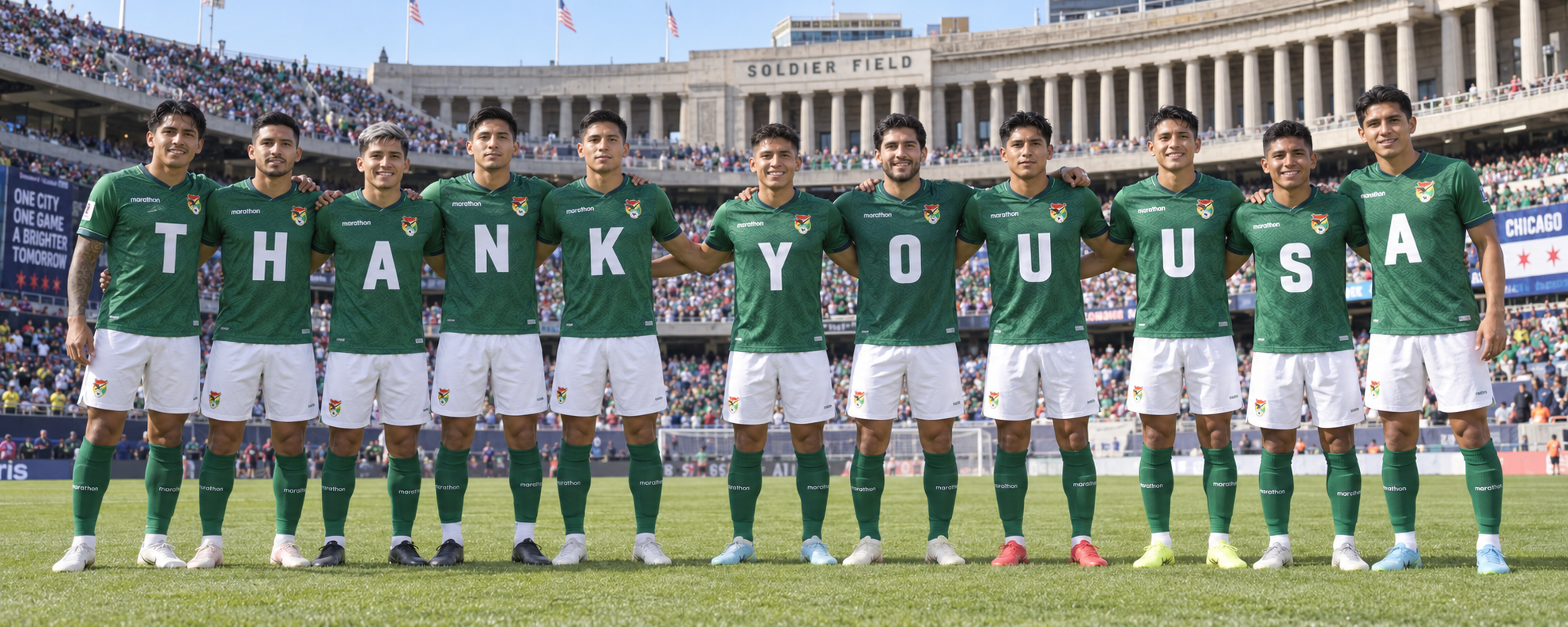
Here’s a tip: Thanking your host by spelling it out on your shirts as a team doesn’t work

Nickname: La Verde
FIFA Ranking: 78 (Oct 2026)
Qualified for World Cup Finals: 3 times (1950, 1950 & 1994)
Best WC result: 1994: This is still the high-water mark. Bolivia qualified on sporting merit for the first and only time, winning five of eight qualifiers and famously beating eventual world champions Brazil 2–0 in La Paz on 25 July 1993 — the first defeat Brazil had ever suffered in World Cup qualifying.
FIFA World Cup 2026 result: Missed by one bloody game: Bolivia finished 7th in CONMEBOL with 20 points, stealing the intercontinental playoff spot from Venezuela on the final night by beating Brazil 1–0 in El Alto, with Miguel Terceros scoring the penalty.
WATCH: 🇧🇴 BOLIVIA — WHEEL OF NATIONS – FAFO: World Cup 2030 Weekly Wheel of Nations – pt. XXI – October 7, 2026:
Spotify Playlist:
The first ever World Cup in 1930 was the tournament’s only edition without qualifying and Bolivia were one of the 13 invitees who actually said yes to the expensive headfuck of somehow getting to the fledgling football competition. And before their first ever World Cup match, the whole team spelled out ‘VIVA URUGUAY’ as a team by each painting a letter on their shirts to thank their generous hosts (above). While a lovely gesture, it did nothing to help the goodwill of their opponents, as Uruguay turned out to be the backdrop to Bolivia getting pounded 4-0 in both of their outings, by Brazil and Yugoslavia.
Sticking to their guns, La Verde went stuck to a trend 16 years later at the 1946 South American Championship (the precursor to the Copa America) with each member of the team painting a letter on their chest to spell out ‘VIVA CHILE’ *Much nicer than spelling out “BECAUSE OF YOU CUNTS, SINCE 1879 WE CAN’T GO THE BEACH’. Yep. And it didn’t help again, as they finished that tournament second from bottom, didn’t win a game and their worst loss was actually a 5-0 trampling at the hands of the hosts. Strike two.

With Bolivia being awarded a slot at the 1950 World Cup only due to three South American sides withdrawing, they faced a sudden death matchup against 1930 host Uruguay. And you would’ve thought some residual warmth from Bolivia’s heartwarming URUGAY jersey gesture twenty years prior still remained, but no, Uruguay didn’t give a fuck about Bolivia’s bullshit little shirt painting thing, and obliterated them by a then equal World Cup record 8-0, eliminating them from the tournament in the process. Yeah, thanks URUGAY. That’s the last time Bolivia does anything nice for you ungrateful motherfuckers.

At their most recent World Cup in 1994, and this time without their chests emblazoned with some bullshit, relatively speaking, Bolivia actually had some success. Ish. They just fell short to a controversial penalty in their opener against Germany, then got their first ever World Cup point in 0-0 draw with South Korea and scoring their first ever goal in their final match, despite losing 3-1 to Spain. With a Copa America win in 1963 and a runners-up in 1997 (both thankfully played on home soil, meaning thanking the hosts by painting a shirt would’ve been as stupid as it can get), after many years, Bolivia’s finally learnt that as long as it wears regulation shirts without some idiot message splayed across them, it’s actually got a shot at some sort of success.

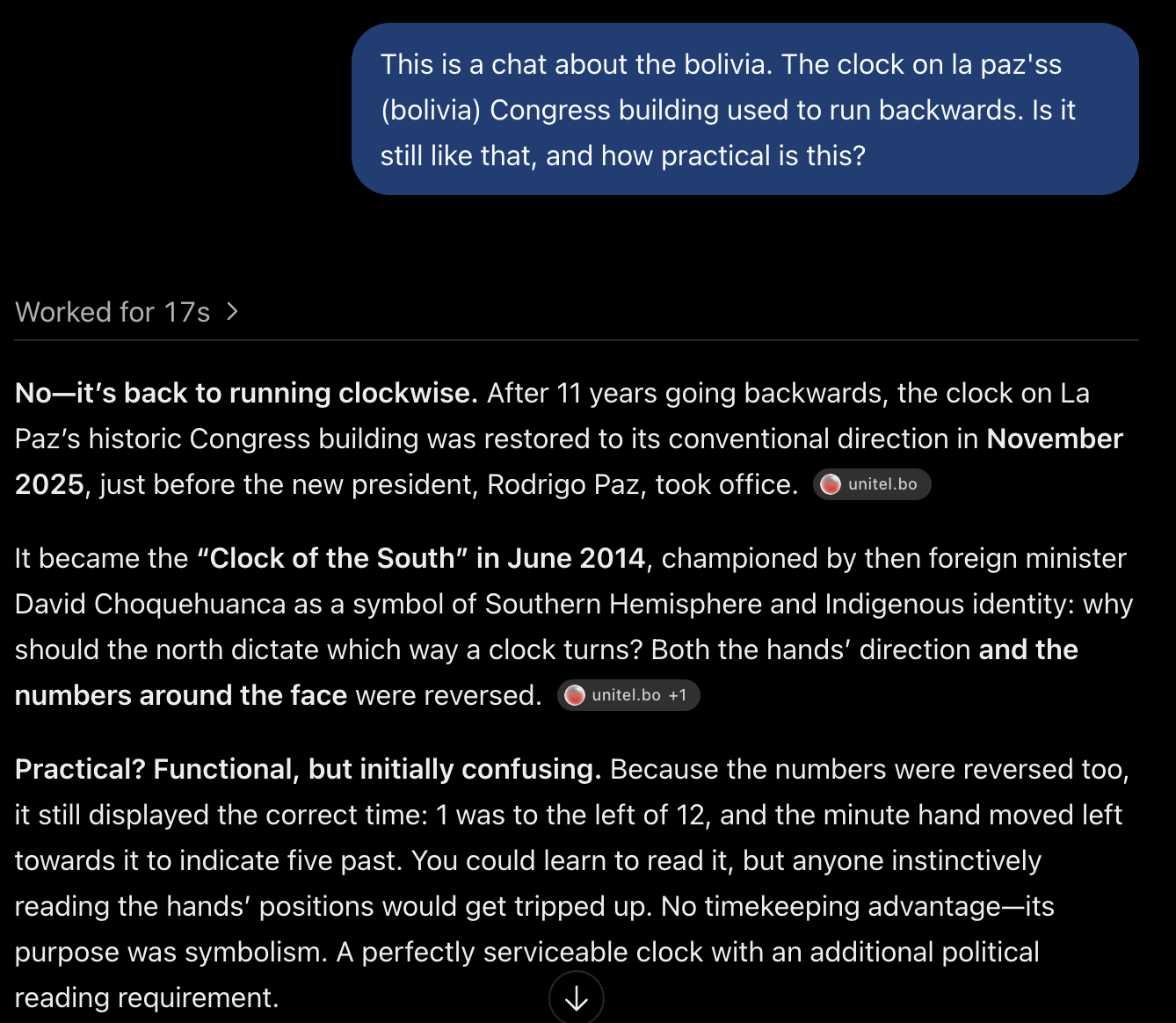
One to watch: The clock on La Paz’s congress building (good one, David Choquehuanca)

Aiming to inspire Bolivians to think outside the box and inspire creativity, the clock on La Paz’s congress building has been reversed, with the clock running anti-clockwise. The idea first floated by former foreign minister David Choquehuanca was carried out in 2014 and the clock continues to run in the opposite direction today. The change was was also made in objection to modern clocks being based on the movement of sunlight in the northern hemisphere, and since according to Choquehuanca, Bolivia’s in the southern hemisphere, so he thought this was a much better idea. Yes. Even though it’s the only clock of its kind on the continent or for that matter, the country or probably the world. Good one, Choquehuanca, ya Choquehuanca.
ast three World Cup finals
1994 — Group stage: Lost 1–0 to Germany, drew 0–0 with South Korea and lost 3–1 to Spain, with Erwin Sánchez scoring what remains Bolivia’s only World Cup finals goal ( but not really, see below). The Soccer World Cups
1950 — Group stage: Their entire tournament consisted of one fairly unpleasant afternoon: Uruguay 8–0 Bolivia in Belo Horizonte.
1930 — Group stage: At the inaugural World Cup, Bolivia lost 4–0 to Yugoslavia and 4–0 to Brazil, scoring no goals.
Last three qualifying campaigns
2026: Their best campaign in decades — 7th with 20 points, including the extraordinary final-day win over Brazil, then beat Suriname before falling 2–1 to Iraq with qualification one victory away. FIFA
2022: Finished 9th with 15 points, although Marcelo Martins Moreno somehow finished as CONMEBOL qualifying’s top scorer with ten goals. FBref
2018: Finished 9th with 14 points, with the campaign made even messier when FIFA overturned a 2–0 win over Peru and 0–0 draw with Chile into 3–0 forfeits because Bolivia fielded ineligible Nelson Cabrera. Inside FIFA
The Highpoint: This, whatever it was, that apparently was a goal at USA 1994, if you consider miserable attempts on goal that only go in via a crazy ass deflections goals
If you have something wrong with you and you are one of those people that consider miserable attempts on goal that only go in via a crazy ass deflection, then this is for you. Bolivia can be your new team, as that’s the ONLY way they score goals at the World Cup Finals.
A sporting experience you’ve gotta go to that’s uniquely local and awesome (and doable): Cholita wrestling in El Alto
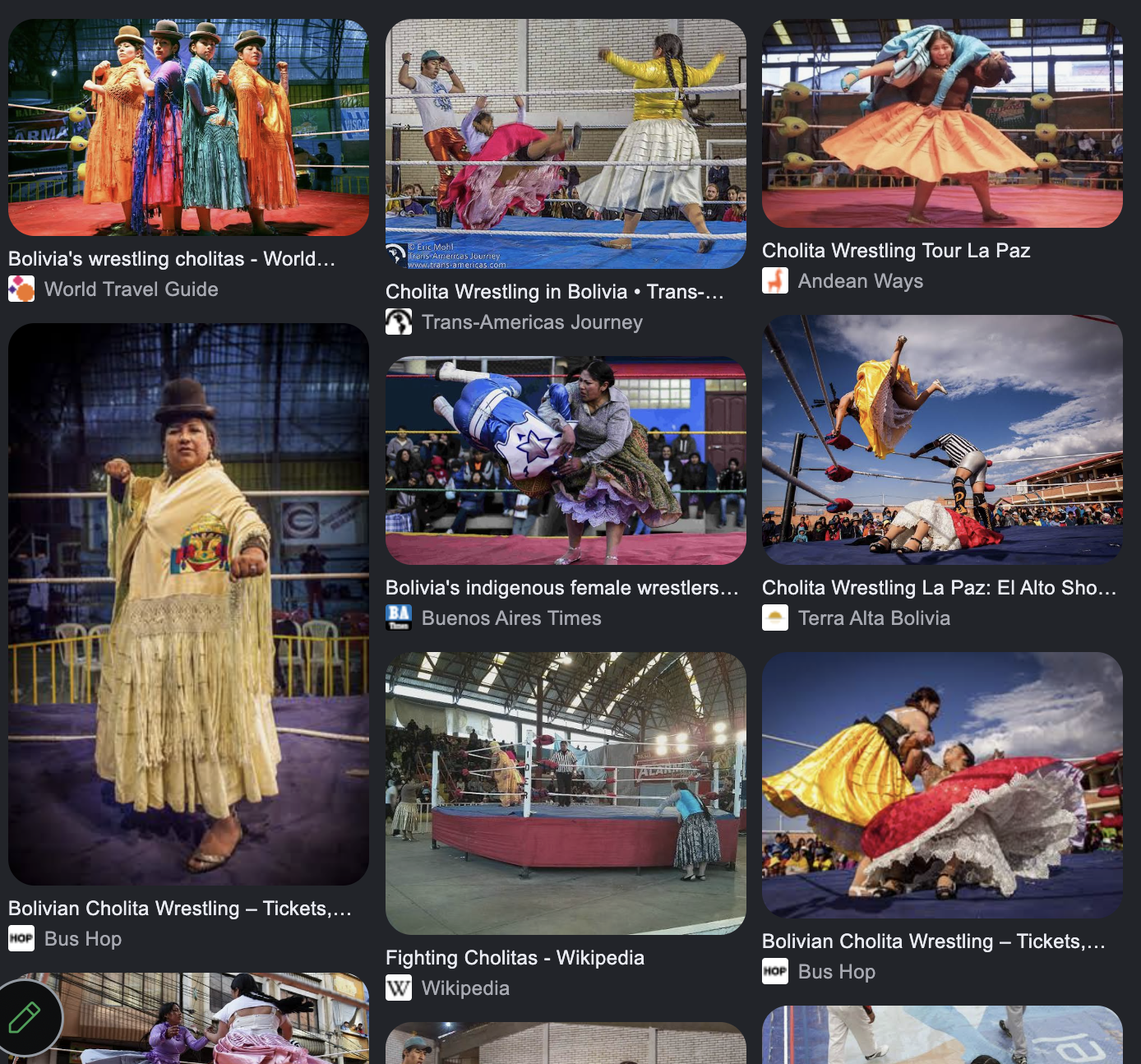
Go up to El Alto — more than 4,000 metres above sea level — and watch Aymara women wrestle in polleras, shawls and bowler hats in Bolivia’s own version of lucha libre.
Yes, it’s professional wrestling. Outcomes are staged, characters are heels and heroes, referees cheat and people get hit with chairs. But the athleticism isn’t fake, and neither is what the clothing represents. The cholita wrestlers emerged in the early 2000s from an existing Bolivian wrestling scene and turned an identity that had historically been discriminated against into the centre of the spectacle. National Geographic
And this passes the tourist-bullshit test better than I initially expected. Some promotions absolutely market heavily to tourists, but local families still attend, and earlier reporting describes families in El Alto attending the Sunday shows religiously.
One unique natural experience to see/visit/experience: Salar de Uyuni

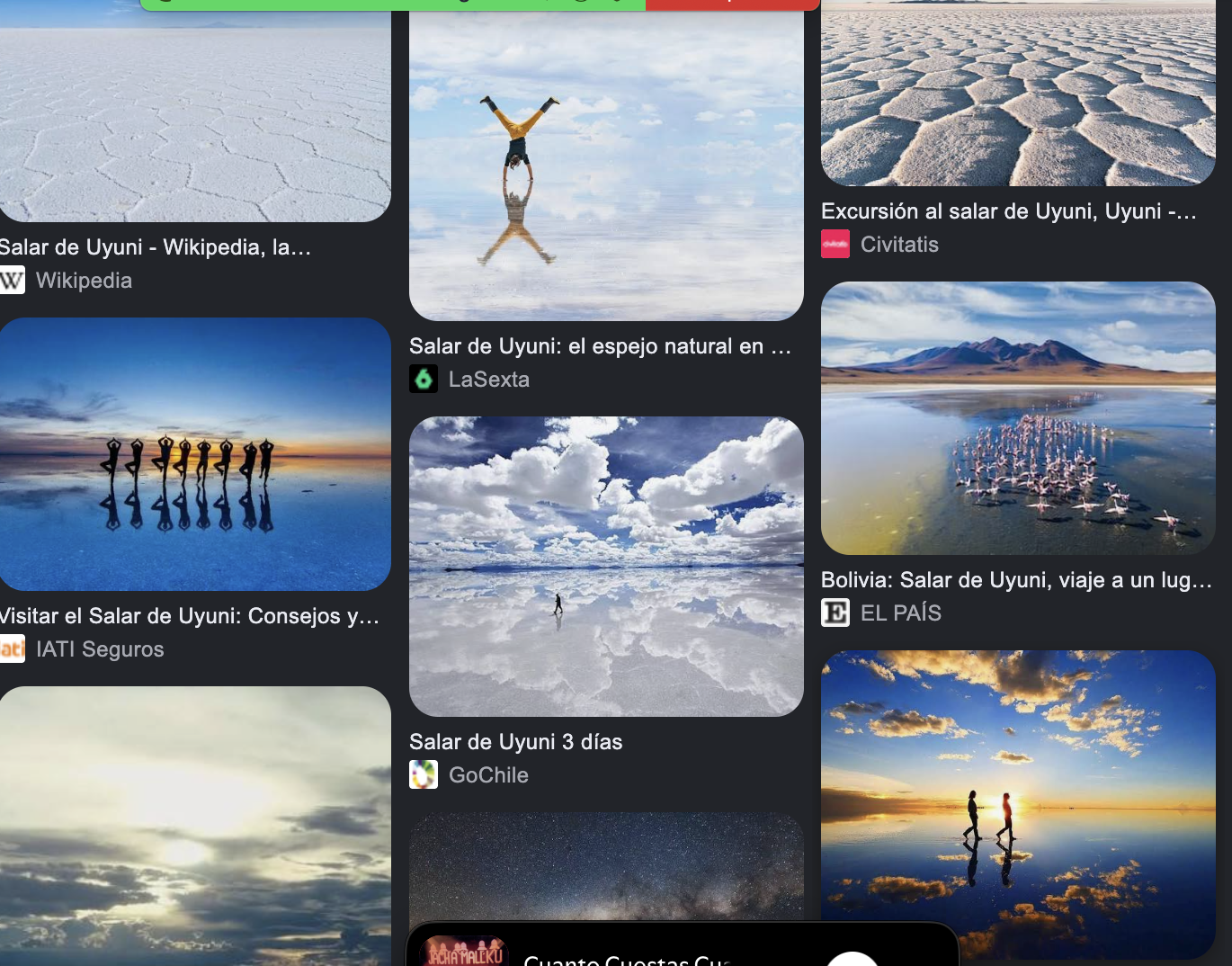
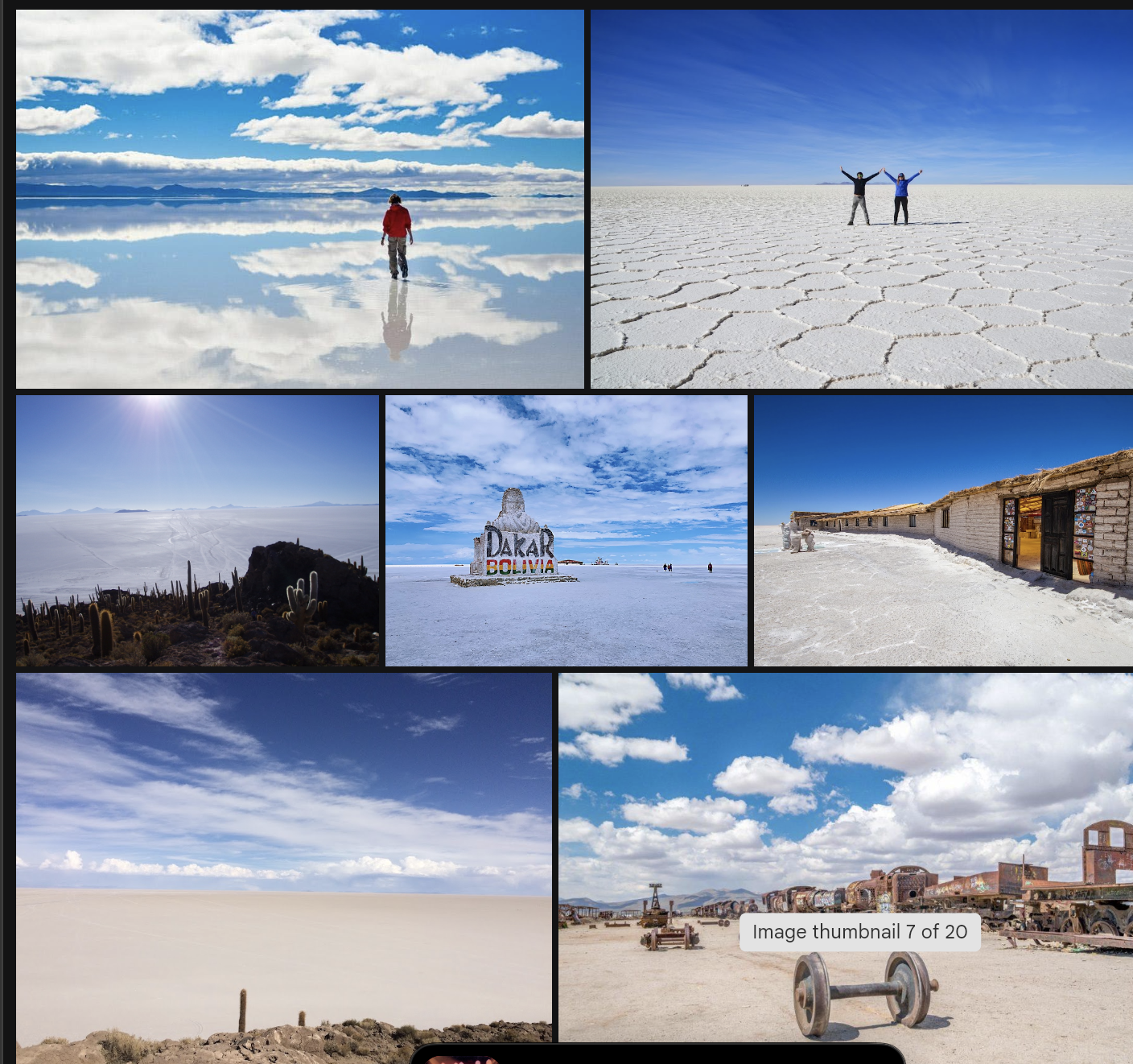
Sometimes the obvious answer is obvious because it’s fucking extraordinary.
Salar de Uyuni is roughly 10,582 km², the world’s largest individual salt flat, sitting about 3,660 metres above sea level. National Geographic
Go in the dry season and you get an apparently infinite white geometric salt crust.
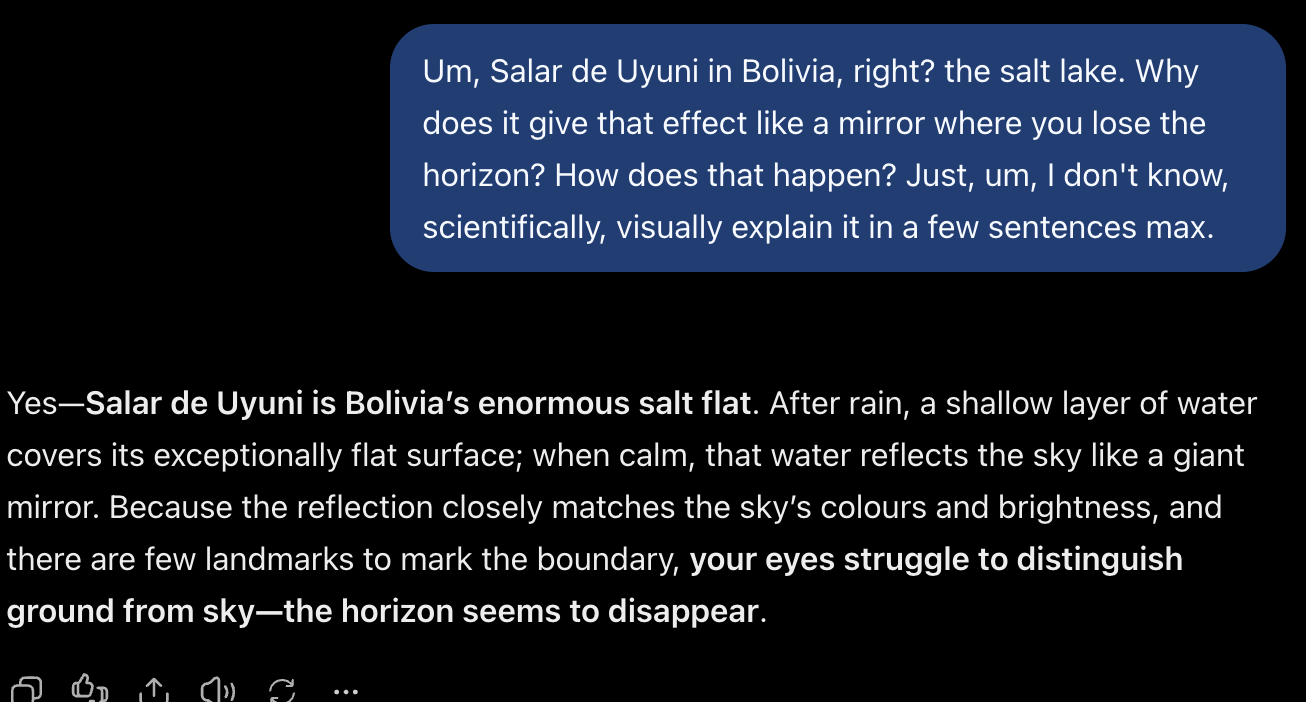
Go during the right part of the rainy season and a shallow film of water creates the famous giant mirror effect where the horizon effectively disappears. National Geographic
Yes, it’s Bolivia’s biggest tourist cliché. I don’t care. You don’t reject Uluru because people have heard of it.
And ideally don’t merely do a two-hour Instagram stop: continue south through the Lagunas de Colores and Eduardo Avaroa region — coloured lakes, flamingos, volcanoes, geysers and high-altitude desert. Bolivia’s tourism authorities now market the Salar and coloured lagoons as a combined destination.
One town/city/neighbourhood the locals love: Cochabamba
Not La Paz. Not tourist-beautiful Sucre. Cochabamba.
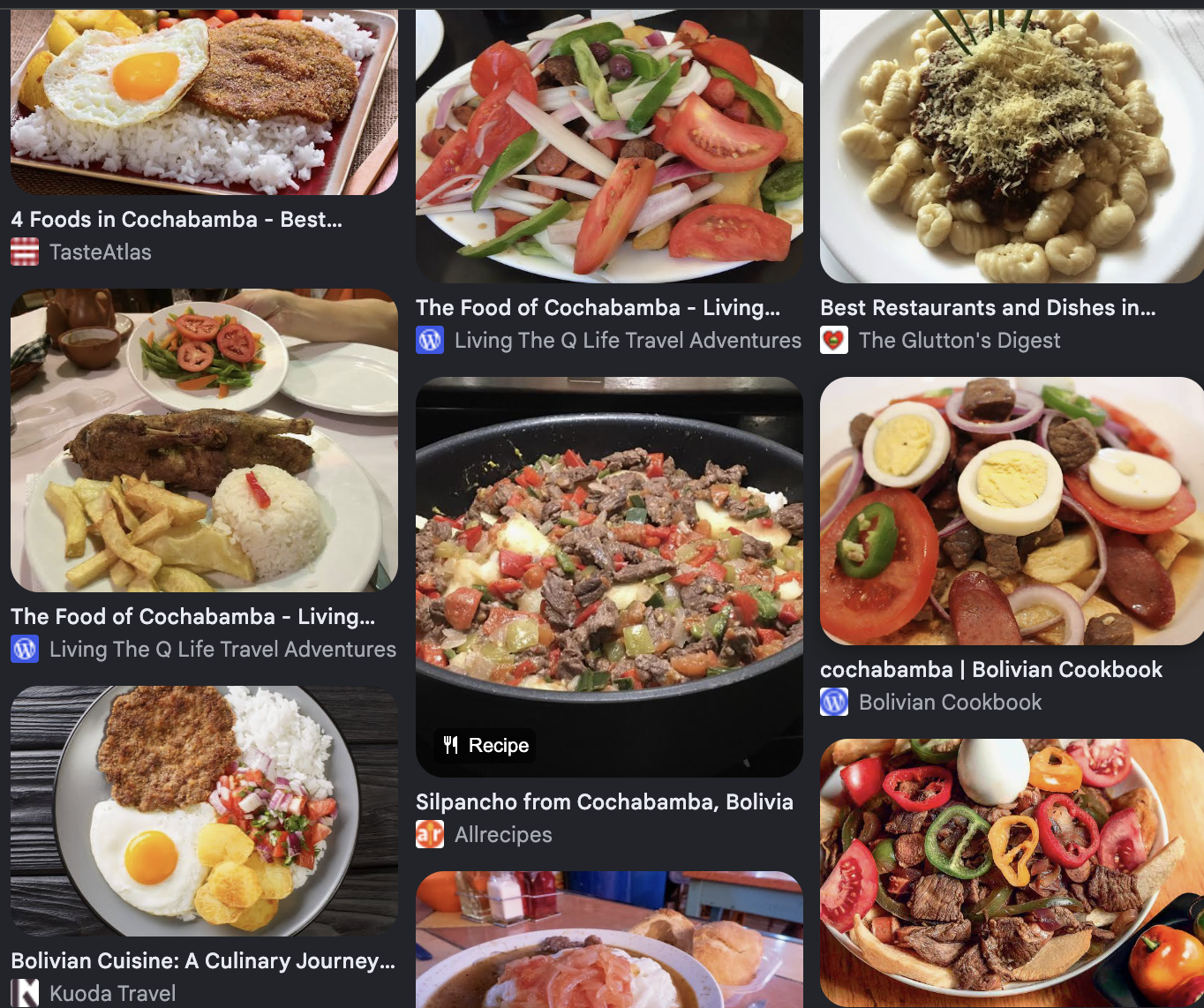
It’s a valley city at about 2,550 metres, with a much gentler climate than the Altiplano and an absolutely ridiculous relationship with eating. UNESCO calls it Bolivia’s gastronomic capital, and records the local saying:
a Cochabambino doesn’t eat to live — they live to eat.
Food and gastronomy account for a significant chunk of the local economy, and the city holds around 100 food fairs and festivals annually. UNESCO
You’ve got La Cancha market, chicharrón, silpancho, pique macho, sopa de maní and enough enormous plates of food to kill the rest of the programme.
It feels like a city Bolivians actually live in rather than somewhere selected because foreigners photograph it.
Food you’ve gotta have: salteña
This one’s locked.
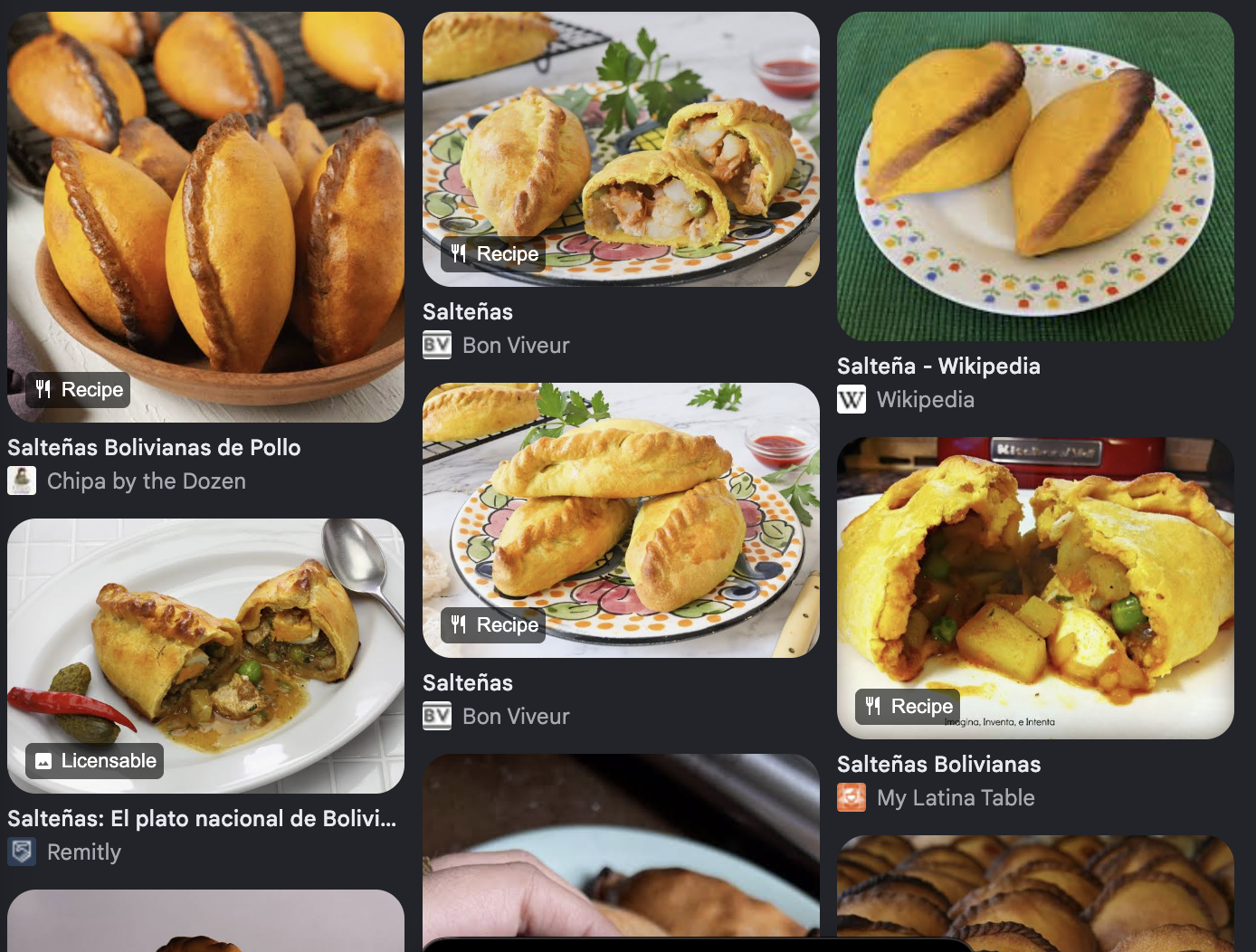
A salteña looks vaguely like an empanada until you bite into one incorrectly and pour boiling meat juice down your shirt.
The slightly sweet baked pastry contains a juicy stew — jigote — usually involving beef or chicken, potato, peas, ají, egg, olives and broth. The filling is gelled while cold so it can be sealed inside; baking liquefies it again. SciELO
More importantly, this is proper everyday Bolivia. Salteñas are eaten across the country as a mid-morning food, sold in streets, markets and specialist salteñerías that often finish once they’ve sold out before lunch. SciELO
And there’s a technique:
Hold vertically → bite the top → sip the juice → continue eating without humiliating yourself.
This is much more Wheel than simply giving you a giant plate of meat.
A drink you’ve gotta smash: singani
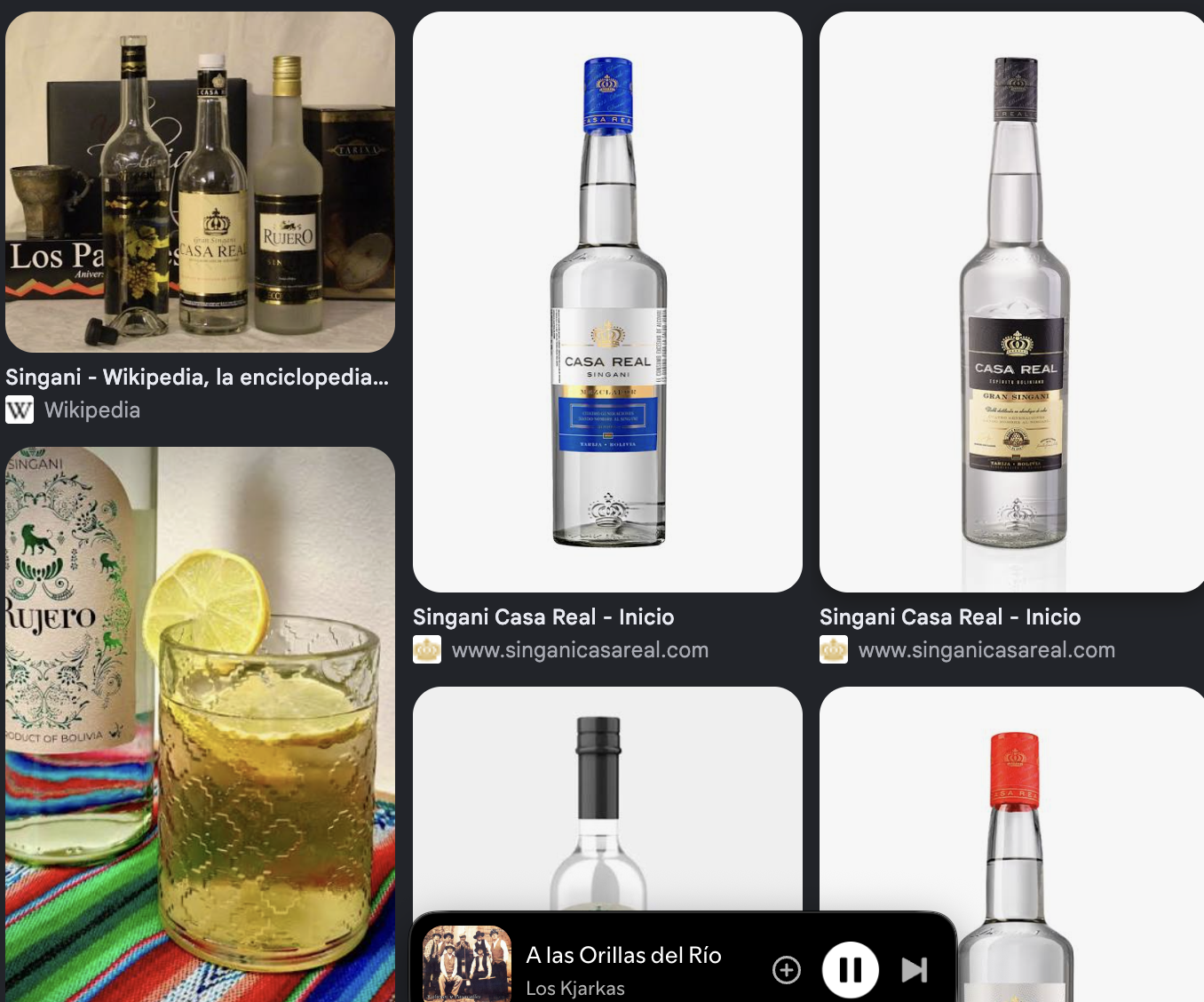
Singani is Bolivia’s own grape spirit. Legally, the name is a protected Bolivian denomination of origin, reserved for spirit distilled from fresh grape wine and produced within designated high-altitude Bolivian wine regions. Bolivia formally protected the denomination in 1992. Senapi
So unlike picking beer or generic chicha, we have something that can essentially say:
“I am Bolivian.”
Traditionally it’s made primarily from Muscat of Alexandria grapes, particularly around Tarija and the Cinti valleys.
And the drink to know is the chuflay: singani, ginger ale, ice and lime/lemon.
The Wedding Banger – Bolivia’s unofficial anthem: “Viva Mi Patria Bolivia” — Apolinar Camacho
This one beats trying to invent a universal Bolivian wedding song.
“Viva Mi Patria Bolivia.”
It’s a cueca written by Apolinar Camacho, originally composed as A Bolivia, and has become so embedded in national culture that it’s routinely described inside Bolivia as the country’s unofficial second national anthem. unitel.bo
There’s also a brilliant football connection: its popularity exploded around Bolivia’s 1963 South American Championship victory and again around the historic 1993 World Cup qualifying generation. YouTube
For the Wheel test — what can you put on that immediately produces Bolivia rather than merely being a famous Bolivian recording? — this wins.
Pick: “Viva Mi Patria Bolivia.”
And keep Los Kjarkas’ “Llorando se fue” very close to the profile: that’s the original Bolivian song whose melody became the global “Lambada”, with Los Kjarkas successfully establishing their authorship after the unauthorized Kaoma adaptation.
3 Legends
⚽ Sport — Marco “El Diablo” Etcheverry: The face of the 1994 generation. He scored in the historic 2–0 win over Brazil in 1993, helped Bolivia qualify for its only World Cup earned through qualification and later became a hugely important player for DC United in MLS. Inside FIFA
And there’s an extremely FAFO detail: after being central to getting Bolivia to USA ’94, his actual World Cup lasted about five minutes before he was sent off against Germany.
🎵 Music — Los Kjarkas: I’m allowing a band rather than forcing one individual. Formed in the Cochabamba region, they helped transform Bolivian folkloric music into popular national music and took it internationally; their songs include “Bolivia,” “Llorando se fue” and “Wayayay.” Their own history describes “Bolivia” as effectively a second national anthem. Kjarkas – Web oficial de instrumentos
And the fact that Lambada → Kaoma → Don Omar → Jennifer Lopez/Pitbull ultimately leads back to a Bolivian folk group is an excellent rabbit hole. Kjarkas – Web oficial de instrumentos
🎨 Culture — Marina Núñez del Prado: La Paz-born sculptor regarded as one of Bolivia’s most important twentieth-century artists, whose work used Bolivian stone, Indigenous forms, women and Andean landscapes to develop a distinctly Bolivian modernist visual language.
🫠 FAFO Favourites
⚽ Sport — Miguel “Miguelito” Terceros: This is probably the first sports approach. He’s 22, plays for Santos in Brazil, and was the face of Bolivia’s 2026 revival: seven CONMEBOL qualifying goals, joint-second behind Messi, including the penalty that beat Brazil and put Bolivia into the intercontinental playoff. He has now extended his Santos contract through 2029. FIFA
Your five minutes is obvious:
“Bolivia came one game from its first World Cup in 32 years. What changed?”
🎵 Music — Alwa: Much more interesting for FAFO than simply chasing the country’s biggest pop star. She’s an Aymara rapper from El Alto who performs in pollera, combining hip-hop with Indigenous identity and increasingly incorporating Aymara language and Andean sounds. Opinión Bolivia
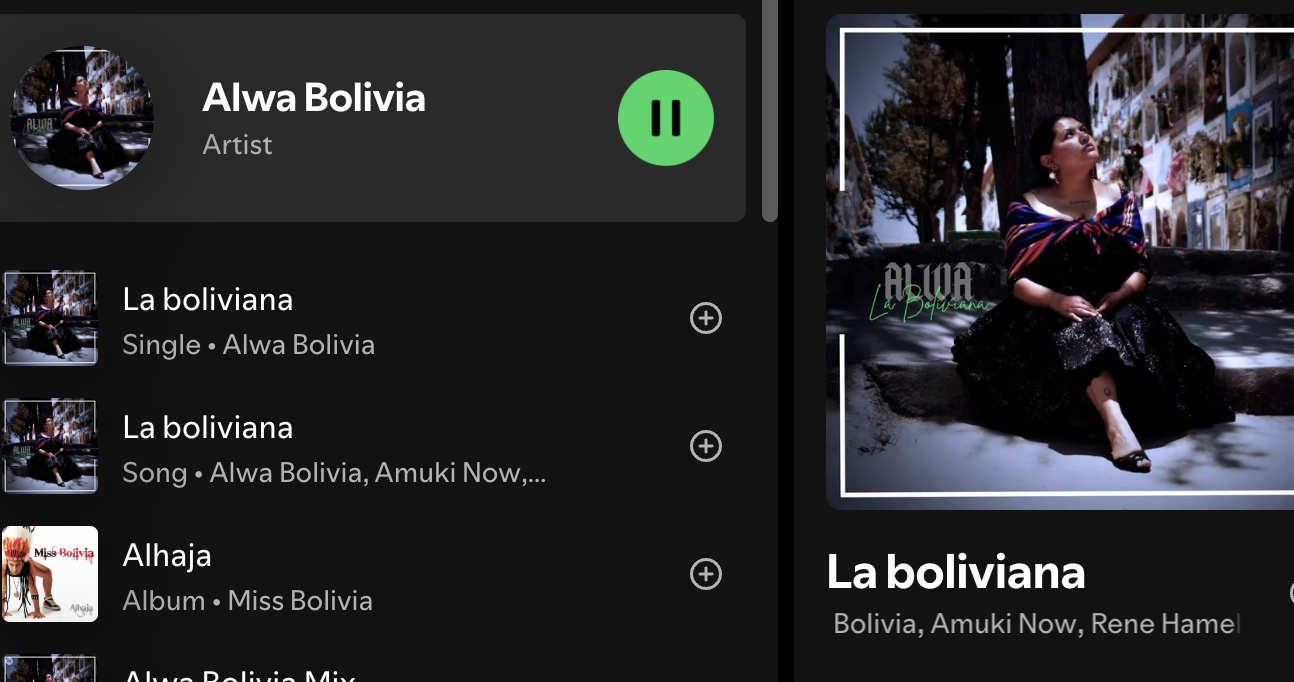
She’s also active now — she released new music in 2026. Apple Music – Web Player
Five minutes:
“What does modern Bolivia sound like?”
🍽️ Culture — Marsia Taha: This might actually be my first overall outreach target. She’s one of Latin America’s most acclaimed young chefs, was named Latin America’s Best Female Chef 2024, and her La Paz restaurant Arami is specifically built around connecting the Bolivian Amazon with the Andes through food. El País
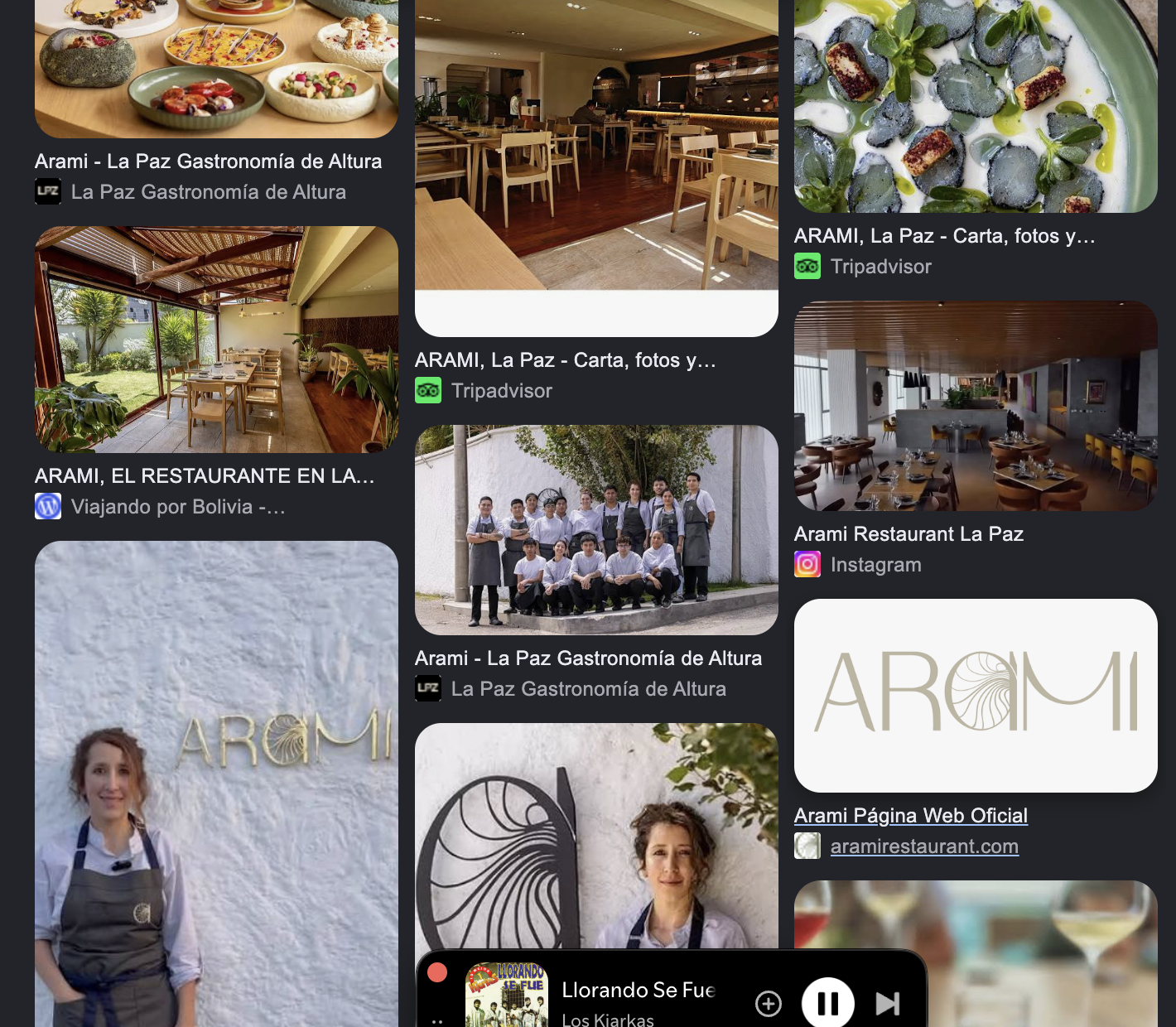
That’s important because there’s a danger that our entire Bolivia profile becomes Altiplano Bolivia — La Paz, El Alto, Uyuni, Aymara culture, altitude. Bolivia also extends into enormous tropical lowland and Amazonian regions.
Her five-minute question therefore becomes:
“What do foreigners misunderstand about what Bolivia actually tastes like?”
And I suspect she’d immediately destroy half our assumptions.
Learn the lingo & speak like a local!