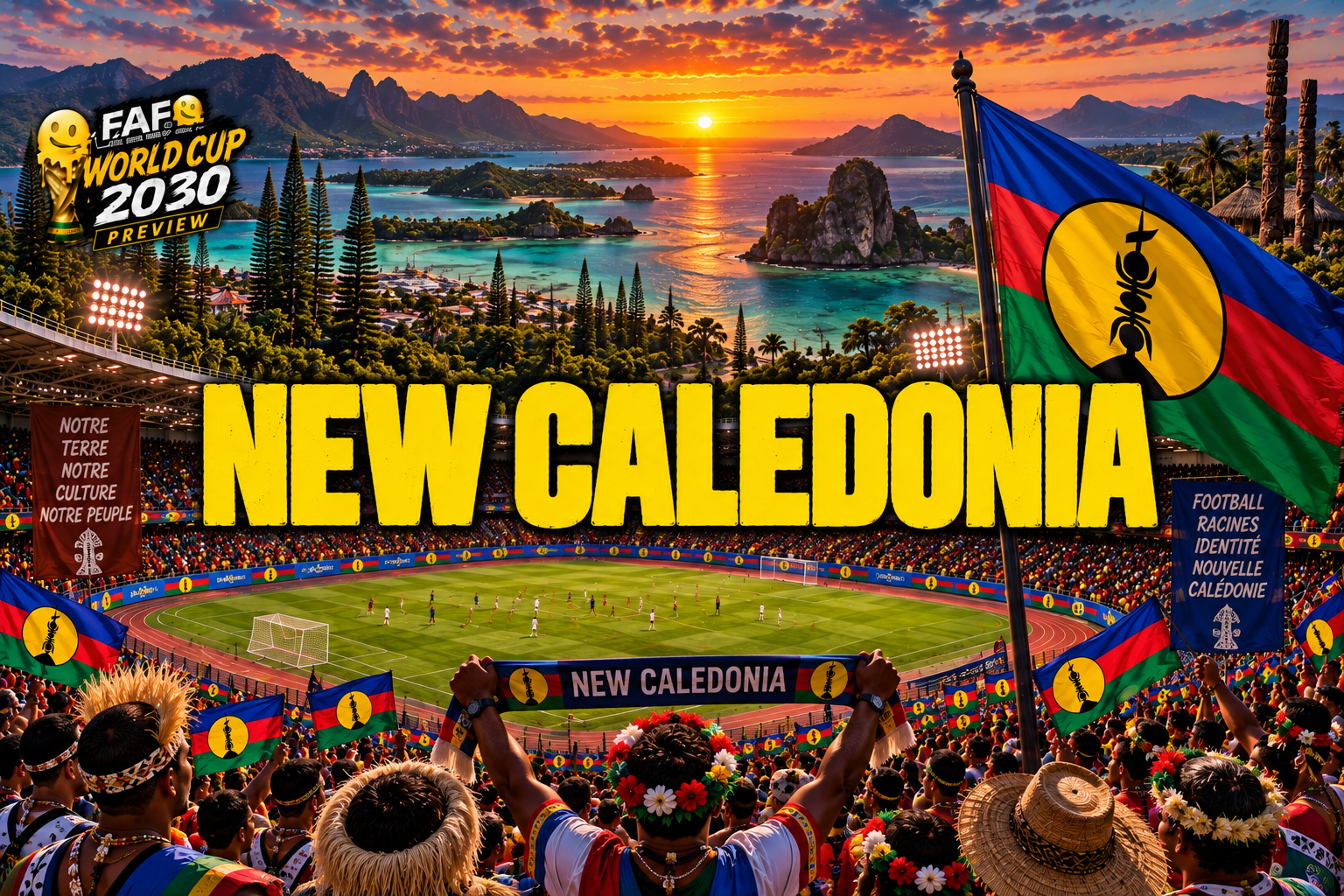
The 2030 FIFA World Cup in Spain, Portugal & Morocco is only about 46 moons away (depending on your own set of lunar circumstances) and it promises to be a real doozy. World Cup history is a tale resplendent with stories of triumph against the odds, childhood dreams coming true and unsung heroes becoming legends. As well as dumb idiot losers, wanker fuck-ups and teams that are just total bullshit.
But how shall ye learn about these legends, losers and teams that are just total bullshit? Well look no further my wayward friend as I, together with the Almighty Wheel (There is only One Wheel, The Roundest One, and FAFO is its Prophet), profile all 211 FIFA member associations eligible for World Cup qualification. Today, I take a look at New Caledonia, which is yet to qualify for a World Cup.


🇳🇨 NEW CALEDONIA
From beating Brazil 3-0 in a World Cup final in 1998 to losing to New Zealand 3-0 in an Oceania qualification final in 2025

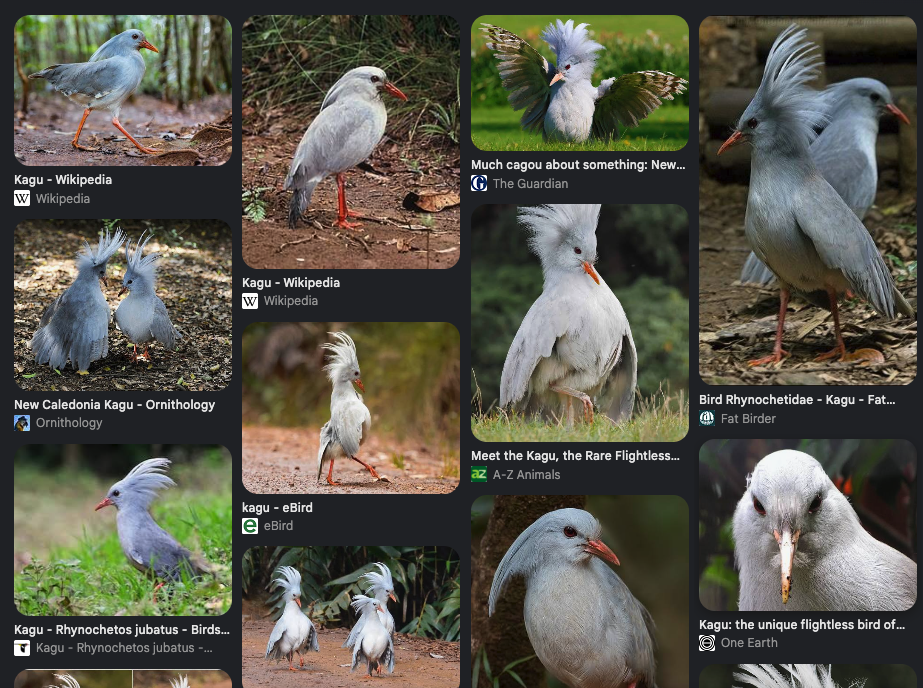
Nickname: Les Cagous (The Kagus)
FIFA Ranking: 155 (Oct 2026)
Qualified for World Cup Finals: Never
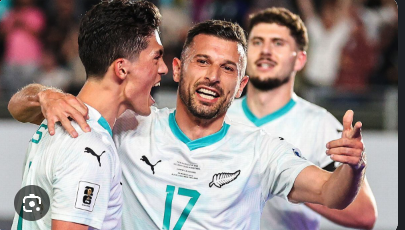
Best WC result: 2026: By miles. New Caledonia won their OFC group, beat Tahiti 3–0 in the Oceania semi-final, lost the OFC final 3–0 to New Zealand, and therefore reached the FIFA inter-confederation Play-Off Tournament for the first time. In Guadalajara they came within a single goal of advancing again, losing 1–0 to Jamaica in March 2026.
FIFA World Cup 2026 result: Lost 1–0 in semi-final of the intercontinental play-offs to Jamaica in March 2026
WATCH: 🇳🇨 NEW CALEDONIA— WHEEL OF NATIONS – FAFO: World Cup 2030 Wheel of Nations – pt. XVIII – October 1st, 2026:
Oh how the mighty have fallen. A mere 28 years ago, New Caledonia’s sole officially international recognized FIFA team, France–with New Caledonian born Christian Karembeu pulling the strings in midfield)–gloriously lifted the World Cup, stunning Brazil and the world to become world champions for the very first time. Now that they are FIFA Member in 2004 and–yikes, this is painful–only 28 years after winning the World Cup, New Caledonia, now a FIFA member in its own right, are ranked 155th in the world and can’t even qualify for the World Cup, even in an expanded version of 64 (compared to when they won it, France 98, a 32-team tournament), but they couldn’t even get qualify from the world’s weakest confederation (Oceania) and got pumped in a half-empty stadium in Auckland by lame New Zealand in the Oceania Final (losing 3-0). LAME. But they did SMASH Tahiti for a place in the Inter-confederation playoffs, and that is FUCKING COOL:

Once upon a time, not so long ago, fans of the national team from this tiny French overseas territory in the Pacific could have its cake and eat it too. Up until it was unfortunately granted full FIFA membership in 2004, not only could it compete in regional tournaments such as the Oceania Nations Cup (finishing third twice, in 1973 and 1980), but when the World Cup rolled around, fans could ditch their New Caledonia gear, throw on a crisp French jersey and jump on the Les Blues bandwagon. And this reached a zenith in 1998, when they celebrated France’s World Cup triumph with cheers of ‘Allez Les Blues!‘ and ‘QU’EST-CE QU’UNE NOUVELLE-CALÉDONIE?! (WHAT’S A NEW CALEDONIA?!)’


Despite its national soccer federation forming in 1928, New Caledonia’s close links to France (and particularly its national soccer federation) precluded it from going it alone or developing its own identity on the field, due to FIFA’s stipulations preventing national teams from the same country facing each other. Sadly, thanks to the bullshit ass 1998 Nouméa Accord that laid out a roadmap for the country’s transition to greater control, increased autonomy and “self-sufficiency” and a subsequent nebulous and totally made up sui generis nation status, New Caledonia’s FIFA team is not world champions anymore (and with France winning again in 2018, it could a two-time winner, and four-time finalist). MOTHERFUCKER.). Instead of New Caledonians now witnessing their team battle to lift the World Cup, fans of its new fully FIFA-eligible national team, Les Cagous, can now enjoy watching their team desperately attempt (in vain) to beat shitty New Zealand. Allez Les Cagous!

Last three World Cup campaigns
Last three qualifying campaigns
2026: Their breakthrough — topped an unbeaten first group with seven points, beat Tahiti 3–0, lost the OFC final to New Zealand 3–0 and then went out 1–0 to Jamaica in the inter-confederation play-off. Oceania Football Confederation
2022: A disaster by comparison: three games, three defeats, two goals scored and ten conceded. RSSSF
2018: Reached the third round and remained competitive — including a 0–0 against New Zealand — but finished behind the All Whites and missed the OFC final.
One to watch: Any coins, wiring, or rechargeable batteries

Look around you… see any coins? Particularly Canadian, US, or the nickel-plated steel coins from the UK that sparked a controversy about nickel allergies? Or what about rechargeable batteries, wiring or steel that has been plated in nickel in order to prevent corrosion and withstand higher temperature? Or electric guitar strings, microphone capsules, plating on plumbing fixtures, or jet engines? Got any of those things round the house? Well, if you do, you can give 5% of a thank you to New Caledonia!

Home to a tenth of the world’s entire stock of nickel, New Caledonia is who you should be 5% thanking for the many fine nickel-related products that have made your life easier. So from now on, anytime you happen to find yourself in the presence of the aforementioned nickel-related products, sure, there’s 95% of a thank you that you should direct to Indonesia, Australia and the Philippines (among others), but 5% of every thank you needs to be said to New Caledonia.
So, yeah, go on, do it, say it. Say 5% of a thank you to New Caledonia for all the nickel in your life.
REPEAT: “5% of a thank you, New Caledonia!”
The Highpoint: Runner-up to New Zealand in Oceania qualifying for the 2026 FIFA World Cup (and not the shit it took in bed in 2022)
New Caledonia came just one game away, to automatically qualify for the 2026 FIFA World Cup, and then disappointignly fell to Jamaica in the semi-finals interconfedration playoffs. Ugh, THE GOALIEEEE…..
fkn cool tho.

Things had really gone south for New Caledonia in the full FIFA international arena since 1998 (see above), but ever since gaining full FIFA membership in 2004, the team has actually become the second strongest in Oceania.
But things weren’t always like this: In September 2008 (just two years shy of New Zealand’s 2010 World Cup heroics), it was Oceania’s highest ranked nation at 95th, and in its three forays in the OFC Nations Cup since it became a part of FIFA, Les Cagous have finished runners-up twice (in turn falling just short of qualifying for the 2009 and 2013 editions of the FIFA Confederations Cup) and third in the most recent edition in 2016. The signs looked promising coming into the centralised World Cup qualification tournament in Qatar in 2022, but then New Caledonia went and shat the bed, finishing equal last in the tournament and nowhere near a qualification berth for Qatar 2022. Supporters will be hoping this defecation in its own sleeping quarters and fractious state of the nation due to its constant wrangling with France over independence aren’t a sign of further messy bed whoopsies to come.

A sporting experience you’ve gotta go to that’s uniquely local and awesome (and doable): traditional women’s cricket on the Loyalty Islands
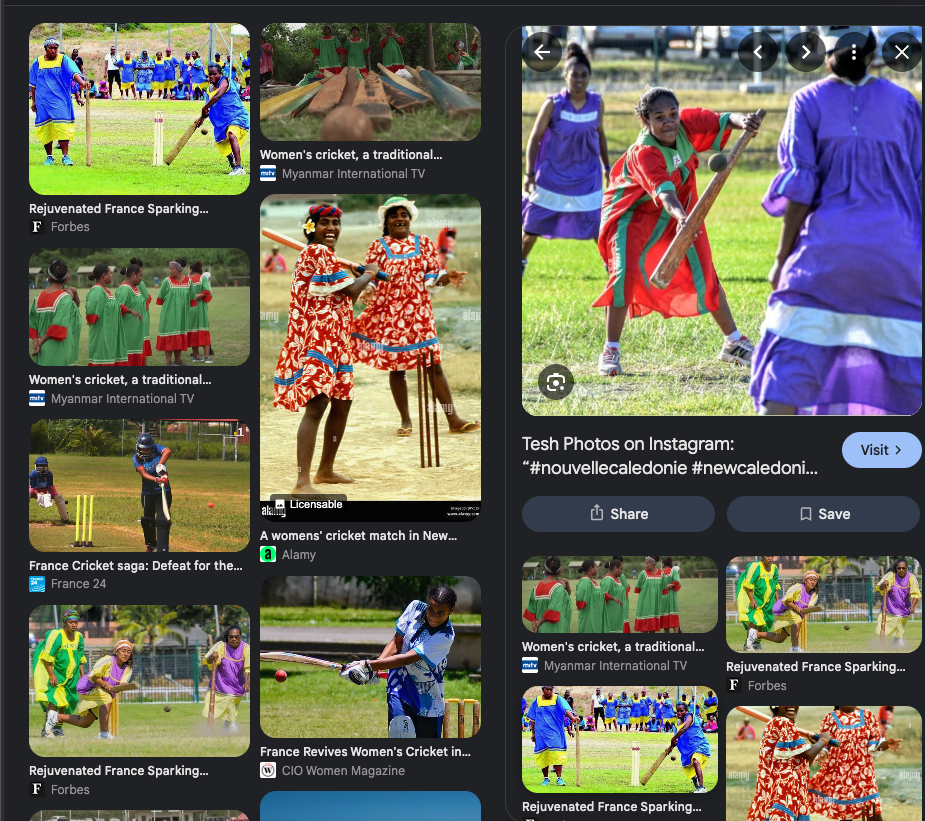
Cricket arrived with British missionaries, but Kanak communities turned it into something distinctly New Caledonian. It is particularly important among Kanak women on Lifou, Maré and the Isle of Pines, with teams traditionally playing in colourful robes mission rather than cricket whites. The local game also uses a shorter bat and traditionally a ball made from banyan sap wrapped in pandanus leaves.
One player from the Isle of Pines described it brilliantly: essentially, all the women play — mothers, aunties, daughters — and you grow up with the game. There are women’s and men’s traditional championships, but this isn’t packaged like a European professional league, so you’d need to check the local schedule before travelling.
For uniqueness, this absolutely beats going to a football match.
One unique natural experience to see/visit/experience: sail Upi Bay in an outrigger canoe, Isle of Pines
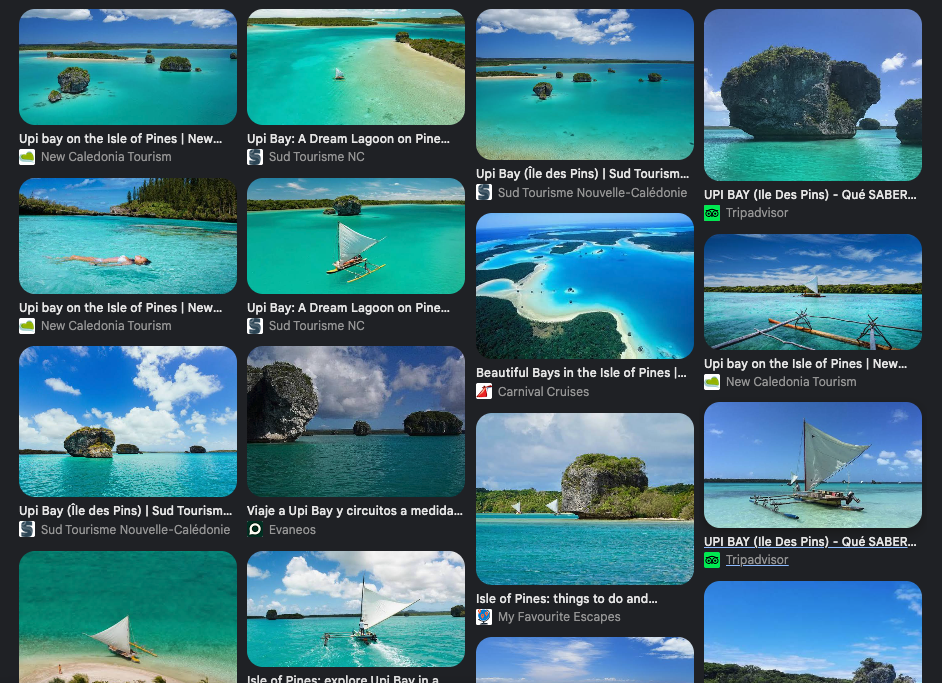
Take a traditional outrigger through Upi Bay, through absurdly blue water between enormous coral formations, looking for turtles and rays, and then continue to the natural pool at Oro Bay for snorkelling.
It’s not merely another Pacific beach. The combination of columnar pines, lagoon, coral rocks and traditional canoe makes it unmistakably New Caledonian.
And the wider lagoon isn’t marketing bullshit: UNESCO describes New Caledonia as having one of the world’s three most extensive reef systems, with the world’s most diverse concentration of reef structures and exceptional coral and fish diversity.
One town/city/neighbourhood the locals love: Bourail
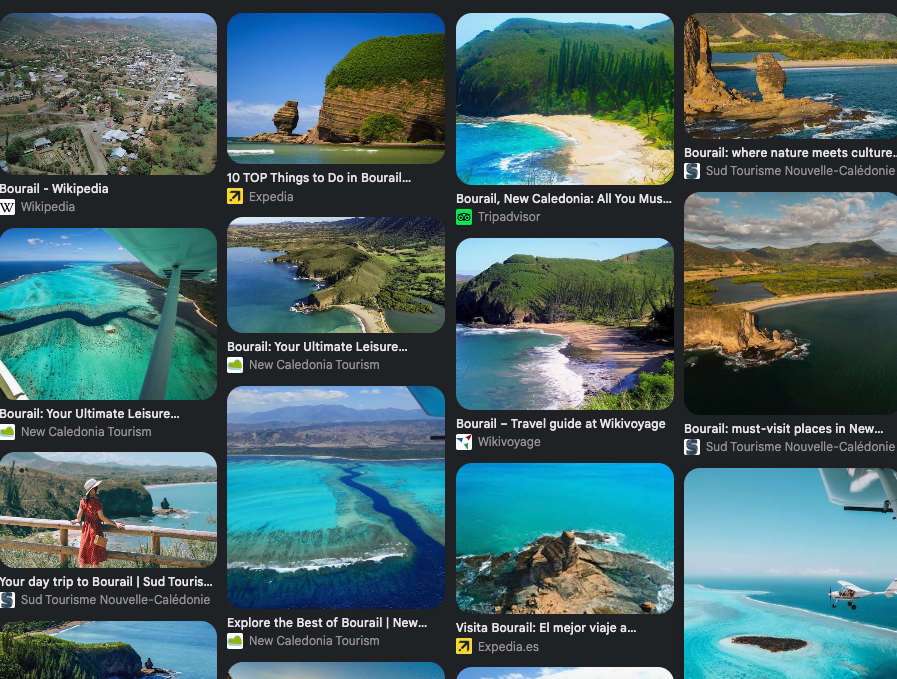
Bourail gives us something completely different from Nouméa or the tropical-island stereotype: Caledonian bush country.
This is stockman territory — cattle, horses, farms, beaches and lagoon — and every August roughly 25,000–30,000 people descend on the place for the Bourail Fair, featuring rodeo, horse racing, livestock, food and what locals call Broussard culture. New Caledonia Travel
Given the size of New Caledonia, that turnout is pretty persuasive evidence that we’re not inventing a town locals supposedly love.
Food you’ve gotta have: bougna
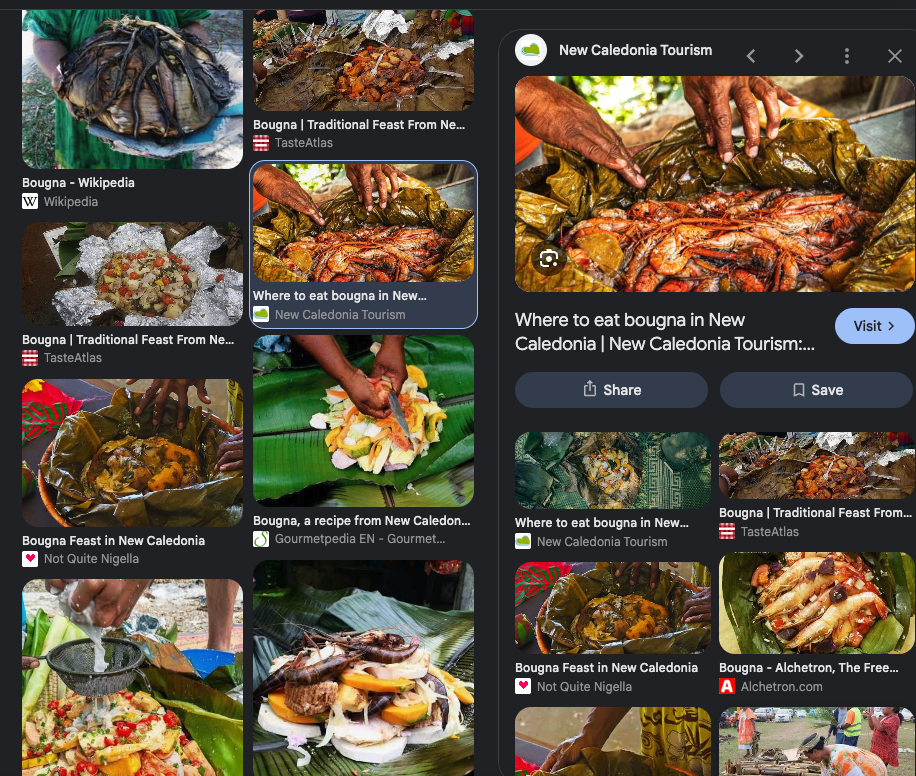
No need to get clever: bougna.
It’s the emblematic Kanak dish: yam, taro, sweet potato and other root vegetables with fish or meat and coconut milk, wrapped in banana leaves and traditionally slow-cooked using heated stones in an earth oven. More importantly, it’s associated with gatherings, ceremonies and sharing, not simply restaurant menus. New Caledonia Travel
Best version of the experience: stay with a Kanak host family and help prepare the bougna, rather than ordering one in Nouméa. New Caledonia Travel
A drink you’ve gotta smash: Number One
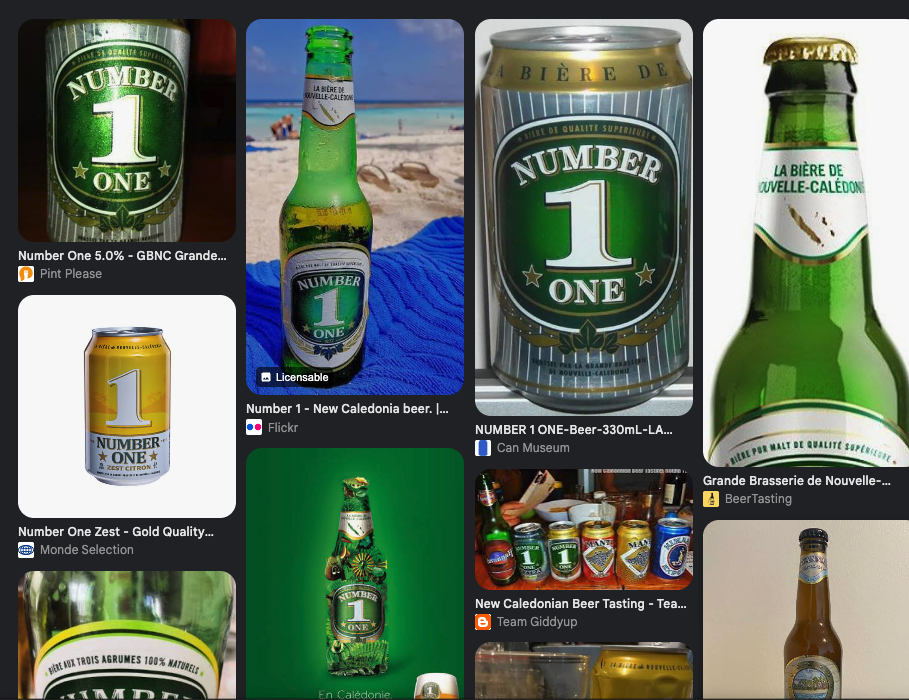
Number One lager.
Kava was tempting because drinking it at a nakamal is now genuinely part of New Caledonian social life. But that’s actually an imported Ni-Vanuatu tradition rather than an old New Caledonian one.
Number One lager.
Kava was tempting because drinking it at a nakamal is now genuinely part of New Caledonian social life. But that’s actually an imported Ni-Vanuatu tradition rather than an old New Caledonian one.
For our “what are you actually drinking with your mates?” test, Number One wins.
The Wedding Banger – New Caledonia’s unofficial anthem: “Waipeipegu” — Gurejele
This one has fantastic evidence for our stupidly specific category.
“Waipeipegu” by Gurejele.
Kaneka is New Caledonia’s home-grown modern musical genre, emerging in the 1980s from Kanak musical traditions mixed with reggae, rock and other contemporary influences. Gurejele, from Maré, became one of its defining groups. Mangrove
And here’s the clincher: a New Caledonian cultural exhibition specifically identified Gurejele’s “Waipeipegu” as one of the songs that gets Caledonians across communities dancing at weddings and nightclubs, producing an immediate shared sense of belonging. Centre Hospitalier Gaston-Bourret
That’s basically the exact fucking test we’ve been trying to establish.
So this one is locked.
3 Legends
3 Legends
Sport — Christian Karembeu: Born on Lifou, moved to France as a teenager, played for Real Madrid and France, and started four matches during France’s victorious 1998 World Cup, including the final against Brazil. He remains the extraordinary link between one of FIFA’s smallest Pacific members and actually winning the World Cup. FIFA
Music — Dick Buama / Gurejele: Buama led the Maré group Gurejele, one of the foundational acts of kaneka. Their debut spread extraordinarily quickly across Grande Terre and the islands in the 1990s, while “Waipeipegu” became their biggest hit; local histories describe the group as fundamental to the development of the genre. Le Mouv’
Culture — Jean-Marie Tjibaou: A central figure in the twentieth-century Kanak cultural revival as well as a prominent independence leader. He helped initiate Mélanésia 2000 in 1975, which brought roughly 2,000 Kanak participants together and attracted around 50,000 visitors, dramatically increasing the public visibility of Kanak culture; today’s Tjibaou Cultural Centre carries his name. He was assassinated in 1989. Centre Tjibaou
🫠 FAFO Favourites
Football — Joseph Athale: One of the central players in that historic 2026 qualifying run and now playing professionally for Tahiti United in the OFC Pro League. He scored three times during New Caledonia’s opening qualifying group and then played against Jamaica in Mexico. He’s particularly useful because he’s living the exact transition the series is interested in: New Caledonian football moving from largely semi-professional structures towards genuine professional opportunities in Oceania.
Music — Marcus Gad: New Caledonian reggae artist with a genuinely international audience but an unusually strong connection to where he’s from. He’s active right now in 2026, released For All this year and has been touring internationally; his music repeatedly draws on New Caledonia, Kanak culture and Pacific identity. That’s a potentially excellent five minutes on what New Caledonia sounds like now, rather than treating kaneka as something frozen in the 1990s. Transbordeur
Culture — Paul Wamo: Lifou-born Kanak poet, slammer, performer and musician who works across Drehu language, poetry, contemporary music, identity and memory. Crucially, he’s also active now: in September 2026 he performed his new ÉTAT D’URGENCE project at the University of New Caledonia. For FAFO, you could basically give him one question: “What do outsiders fundamentally misunderstand about New Caledonia?
Learn the lingo & speak like a local!